Poland caught up fast in the EU. The bill now sits on Warsaw's books.
Two decades of membership closed much of the gap with the EU, but the euros did less of that work than the price tag suggests. The deficits and debt are Poland's own, and the next round of costs is still up for grabs.
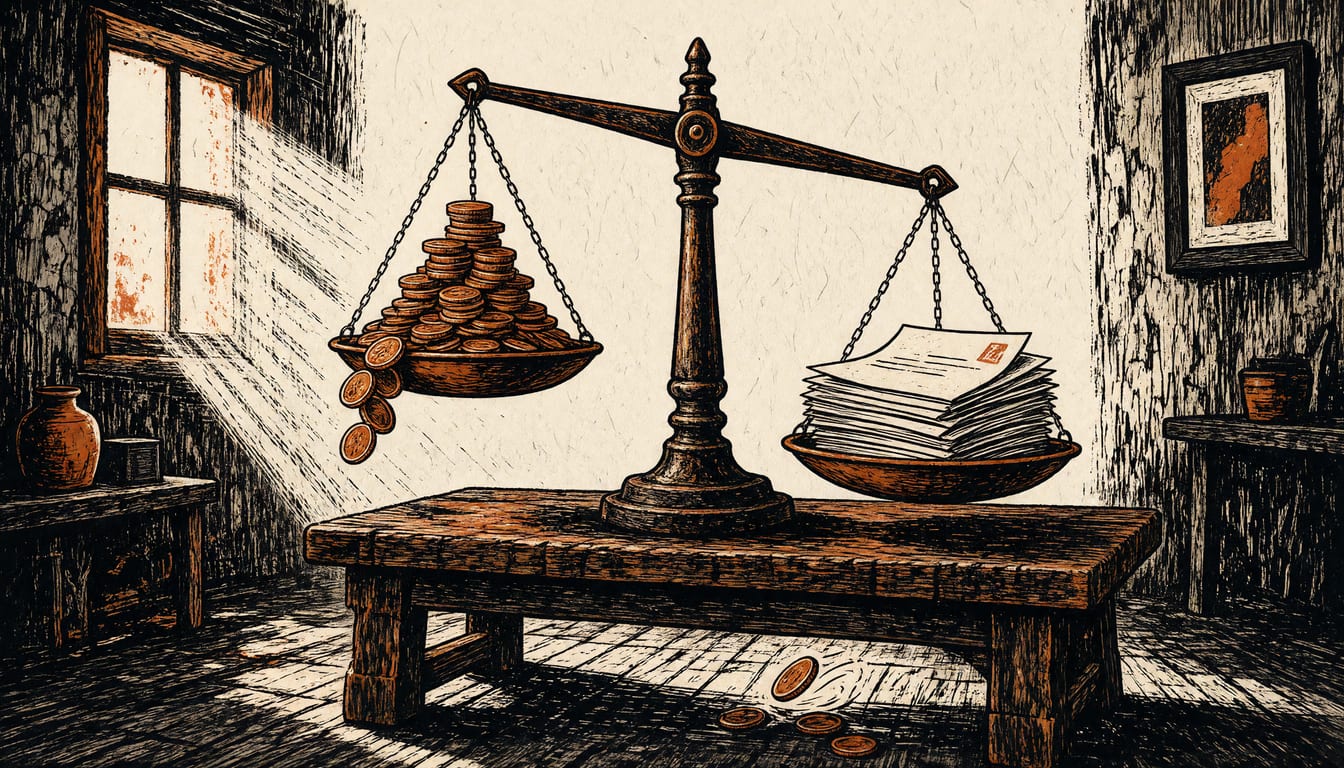
Poland has sent money to Brussels and drawn more back. Over sixteen years of membership it paid 58 billion euro into the EU budget, Business Insider calculated from the Finance Ministry's figures. It received over 181 billion euro.
Statistics Poland has tried to measure part of what membership changed. "Depicting the full spectrum of changes in a concise form is an almost impossible task," the office said of its two decades survey. It presents only selected phenomena.
The share of Poles living abroad rose to 2.3 percent by 2007 from about 0.5 percent in 1998, the figures show.
Statistics Poland's president put the gains plainly. Fifteen years of membership brought, in his words, "many economic and social changes enhanced by open borders, participation in the single European market and the possibility of using EU funds."
The bill is now coming due. The IMF finds the deficit rising to a projected 7 percent of GDP in 2025.
The money spent correctly
Poland's audit office, NIK, checked 2007-2013 budget spending and found the money spent effectively and correctly, it reported in November 2012.
Over 2004-2021 Poland's economy grew 99.1 percent in real terms, against an EU-27 average of 25.2 percent, the third fastest, the government's evaluation site ewaluacja.gov.pl states.
Janusz Lewandowski, an MEP and former EU budget commissioner, named the other source. The fundamental benefit, he said in 2021, is "access to the free European market", as quoted in Polish by Onet, a Polish news site.
A study of 1998-2007 data found emigration nudged wages up for the medium- and high-skilled workers who stayed.
In 2015-2018 the impact of EU funds on GDP weakened and turned technically negative, the ewaluacja.gov.pl page states, because the 2007-2013 budget ended before the 2014-2020 projects got going.
How the evaluators arrive at the funds' effect is itself a caveat. They compare a Poland with the money against a Poland without it, using Statistics Poland, ministry studies and Eurostat data for 2004-2021. Romania, Malta and Bulgaria drop out of the cross-country comparison, the evaluators note, because their data is unavailable.
Spending drove the deficit
The IMF has put the spending side of the story on Poland's own books. The widening of the deficit since 2021, it notes, reflects a substantial increase in expenditures, not falling income. Debt is on the same path: by 2031 it would reach 78 percent of GDP, the fund projects. That is well above the EU benchmark of 60 percent.
That projection assumes current policies hold.
The negotiating box for the next EU budget gives member states with a direct external border with Russia or Belarus a factor of 1.25 in the border management allocation, the text shows. Poland has that border.
Poland's authorities told the IMF that the planned ETS2 emissions pricing unfairly shifts the burden of decarbonisation to lower income countries. In their view it should not proceed in its current design.
The loss count
Not everyone counts the EU money as a gain. In September 2021, the MEP Patryk Jaki presented a report in the Sejm, Poland's parliament, that counted the membership years as a loss. By its arithmetic, Poland lost 535 billion zł over sixteen years.
The report met a hard response at once. Maciej Bukowski, head of the think tank Wise Europa, said the authors compromise themselves. Bukowski said the report's authors compromise themselves, and suggested they either do not understand their own arithmetic or want to manipulate readers, as quoted in Polish by Onet, a Polish news site.
The gap closed
The catch-up was real and large. The gap between Poland and the EU average in GDP per capita closed by 25.7 percentage points over the membership period, according to the government evaluation site ewaluacja.gov.pl.
European Funds did less of that closing work than their price tag suggests. They account for nearly 17 percent of the closing; in the richest regions only 13 to 15 percent, the evaluation shows. The evaluators warn against giving accession all the credit.
What is left is the bill. The deficit grew on spending alone, and the IMF projects debt will pass the EU benchmark. How the next costs are split, at the Brussels table and at the fuel pump, is still unsigned.
The negotiating box binds no delegation, and the Council says nothing is agreed until everything is agreed.
The IMF notes that opposition to tax rises for ordinary households and the coalition's narrow majority may limit hard reforms before the November 2027 election. The defence escape clause spares Poland new adjustment before 2029, the fund's staff assess.