Dutch MP wants ban on addictive app design, with off-switch for repeat offenders
The PvdA bill would fine platforms for tricks like endless scrolling, then pull the plug. Kathmann coordinates rules with MPs in seven other countries.
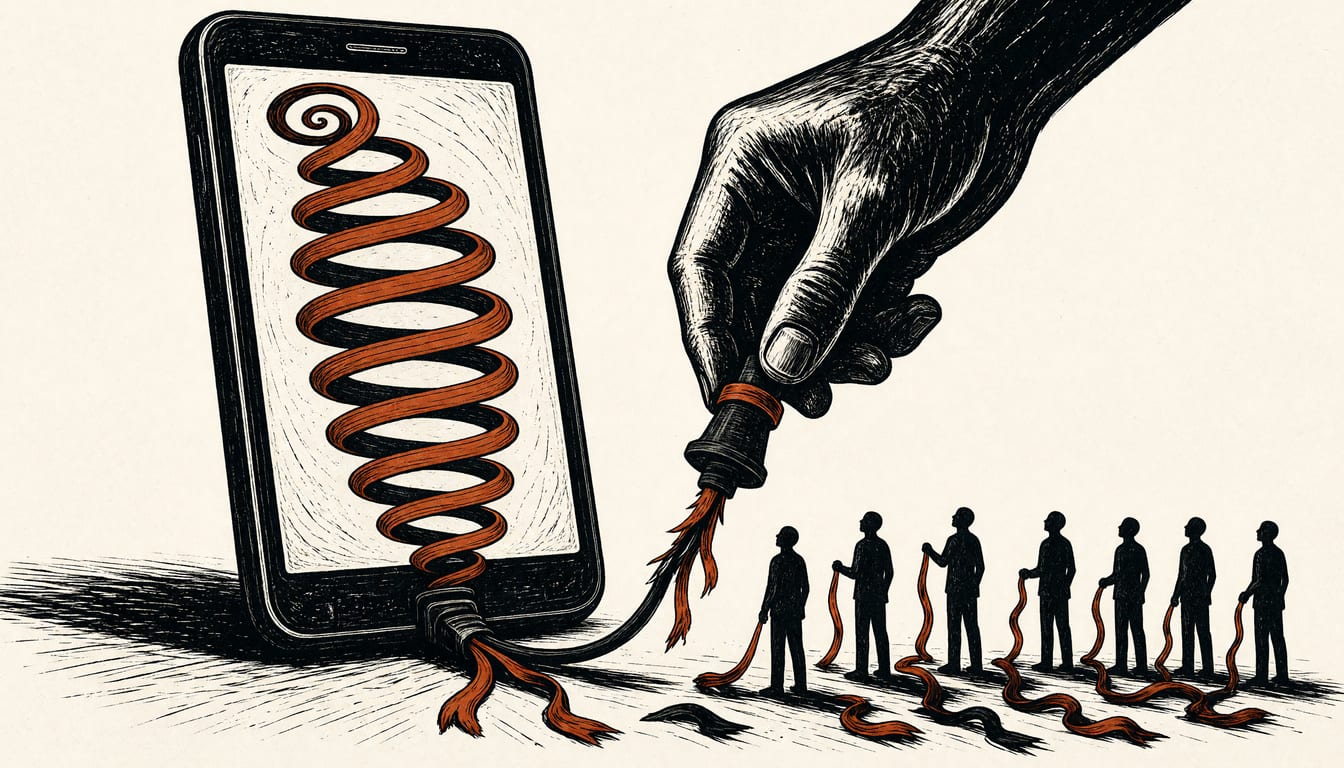
Barbara Kathmann, a member of parliament for PvdA, the Dutch labour party, introduced a bill on 2 November to ban harmful, addictive algorithms in the Netherlands. Platforms that break the rules would first get a warning, then a hefty fine, and upon repetition would be switched off, she said. The plan counts design tricks like endless scrolling and luring users into purchases as banned 'unfair commercial practices'. Kathmann said she prefers tackling the problem at European level, but that this takes too long. Two yellows make a red: then we will simply pull the plug on your platform, Kathmann said.
The Dutch plan reaches beyond feeds. It would cover games, dating apps and chatbots too. Brussels warned in September, when it tabled the KIDS Act, that separate national rules on minors risk fragmenting the single market. The Commission also said uneven national protection cuts legal certainty for companies and raises compliance costs.
Kathmann cites notifications that lure users to payment screens as a further example of design that legislation could ban. Kathmann said manipulation that keeps people online and prompts them to spend money and time must be removed. As consumers, she said, we deserve better protection.
In February, the Commission found TikTok in preliminary breach of the Digital Services Act over addictive design like infinite scroll and autoplay. In February, it said the findings present a 'categorically false and entirely meritless depiction of our platform' and that it would 'take whatever steps are necessary to challenge these findings through every means available to us'. In February, Katarzyna Szymielewicz of the Panoptykon Foundation, a digital rights organisation, called the Commission ordering TikTok to change its basic design 'ground-breaking for the business model fueled by surveillance and advertising'.
Eight countries join the plan
Kathmann is not working alone. She is coordinating the rules with parliamentarians in Germany, France, Belgium, Luxembourg, Austria, Italy and Portugal. The aim, she said, is to make the rules stick, so they can no longer be lobbied away in Brussels. A member state should not be shy about leading the way, Kathmann said. Good laws proposed in Brussels are often lobbied away, she said: there are more tech lobbyists than MEPs.
In July, EU tech chief Henna Virkkunen said protecting the physical and mental health of Europeans must be a priority for social media platforms. She said the DSA gives a clear framework to hold platforms accountable, and that the Commission is fully committed to enforcing European law. The Commission demands TikTok change its basic design: disable infinite scroll over time, add screen-time breaks including at night, and adapt its recommender system.
Facebook and Instagram under review
In July 2026, the Commission said Facebook and Instagram appear built to be addictive. The finding was preliminary under the Digital Services Act, with a possible fine of up to 6% of global annual revenue. The company rejected the findings. Meta said they do not take sufficient account of its protective steps for teens, pointing to Teen Accounts launched on Instagram in 2024.
A fine of $12 billion
On Meta's 2025 turnover of about $201 billion, a 6% fine would reach roughly $12 billion. CNBC, DW, The Guardian and The Next Web reported that in July. During 2025 and 2026, Italy, France, Norway, Greece, Austria, Poland and Belgium notified the Commission of draft laws limiting minors' access to certain digital services. Norway filed its draft in May 2026.
Brussels has a date for its own answer. The Digital Fairness Act is expected to be proposed on 11 November 2026, iapp reported. It would be negotiated in parallel to the EU Kids Act proposal. Commissioner Michael McGrath called it the missing piece of the puzzle in the EU's digital rulebook.