
Opinion
Brussels found the addiction. Now it must ban the design, not the bans.
The Commission's own findings name the machinery of Meta's and TikTok's addictive design, yet after two years and five sets of findings there is no final decision and no scroll switched off. With lawmakers in seven countries moving to ban infinite scroll, autoplay and luring notifications, the Commission should write the ban Europe-wide into the Digital Fairness Act instead of calling the patchwork fragmentation.
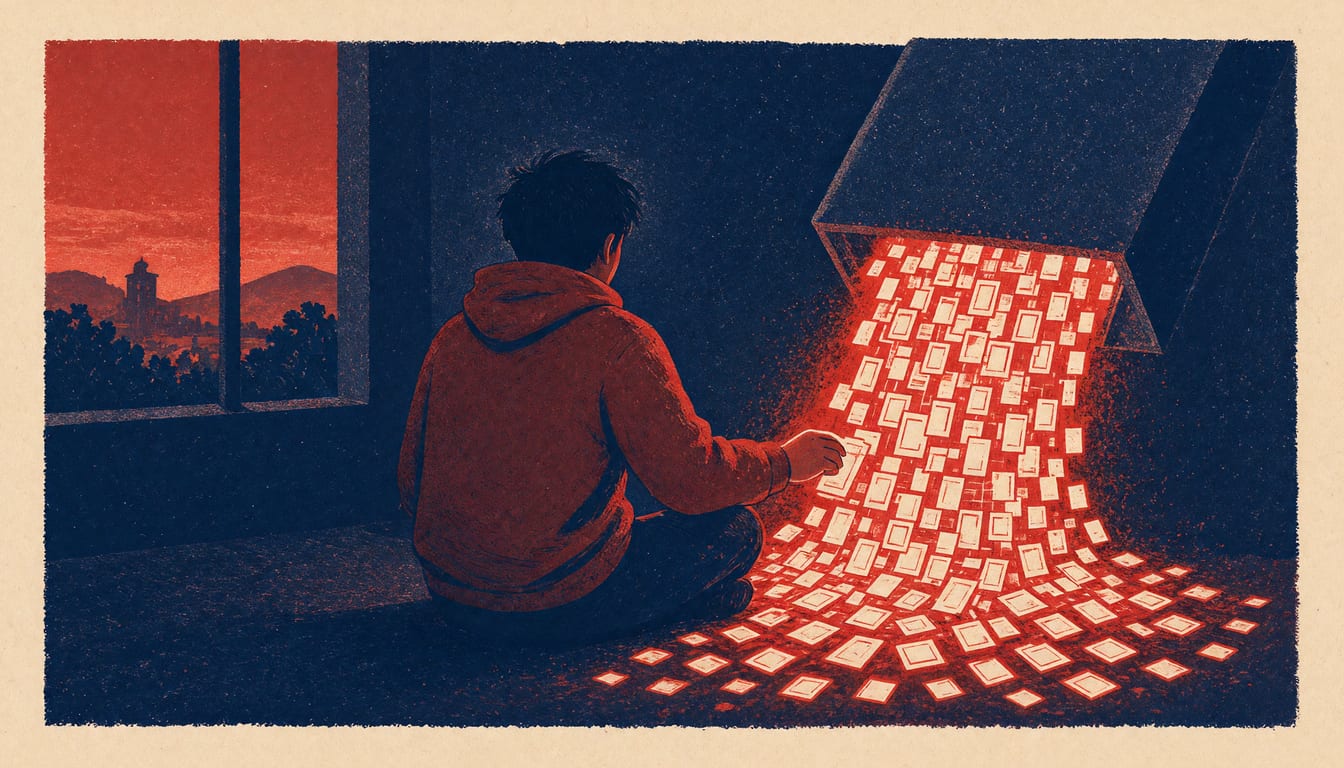
The Commission's preliminary findings accuse Meta of building Facebook and Instagram to be addictive, before a possible fine of up to 6 percent of global annual revenue. Now the Commission must ban the addictive design itself, not let each country fight it with bans of its own. On 2 November, Barbara Kathmann, an MP for the PvdA, the Dutch social-democratic party, introduced a Dutch proposal to make endless scroll, autoplay and luring payment notifications banned unfair commercial practices, and she is working with lawmakers in Germany, France, Belgium, Luxembourg, Austria, Italy and Portugal to do the same. Lawmakers in seven countries is not fragmentation. Kathmann says a member state should not hesitate to want to lead the way, so this can no longer be lobbied away in Brussels.
The Commission knows. Its own preliminary findings under the Digital Services Act said as much in July 2026. The findings name the machinery precisely: autoplay, infinite scroll and highly personalised feeds that fuel users' urge to keep scrolling, inducing "autopilot mode" and compulsive use. The same charge went to TikTok in February 2026, with the same features named. It was ground-breaking. All of it is still only preliminary.
Preliminary is the problem. More than two years investigating, three sets of findings against Meta, two against TikTok, and not one final decision, not one fine, not one scroll switched off. The Commission itself has named the remedy, but the findings it issued in July are still only preliminary. The fine on offer could reach 6 percent of Meta's global revenue, roughly 12 billion dollars on 2025 turnover of about 201 billion, and still the file sits unopened. Meta waves away the charge with Teen Accounts, which a Commission official already dismissed as easily avoided and too weak to change habitual use. Meanwhile, the Dutch proposal says millions of people report unhappiness because of social media, with the online world always among the top five causes, and young people's mental health deteriorating. The remedy it offers is stark: a warning first, then a hefty fine, then the platform switched off. Kathmann prefers European action, but European action takes too long.
The objection is real and we take it seriously: one market needs one rulebook. The Commission warns that diverging national draft laws fragment the single market, reduce legal certainty and raise compliance costs, and it has a point: in September, the French Constitutional Council, the body that reviews French laws against the constitution, struck down France's age law as a disproportionate interference with freedom of opinion. But the answer to a patchwork is not paralysis. It is the Europe-wide ban the patchwork is demanding, and the courts can strike down a badly drafted age limit and still uphold a ban on a manipulative sales trick, which is what endless scroll is, a trick to sell your attention. When a member state leads, Brussels follows: the Dutch lawmaker points to Germany's mandatory cancellation button for online shops, first tried nationally, then adopted at EU level.
The Commission has two dates in front of it, and we are watching both. Finalise the Meta and TikTok files and apply the remedy it wrote itself in July. Then, on 11 November, write the same ban into the Digital Fairness Act, which the Commission is expected to propose that day and to negotiate alongside the EU Kids Act. Brussels found the addiction. Now it must ban the design, not the bans. We who scroll, and we who pay for the damage this design does, can wait through no more files.